The "60–20–20" Strategic Training Model - NCDMB
- February 6, 2026
Is your training strategy truly building a workforce, or just running programs?
One of the biggest challenges in workforce development is misaligned training; people get trained, yet industries still struggle to find job-ready talent.
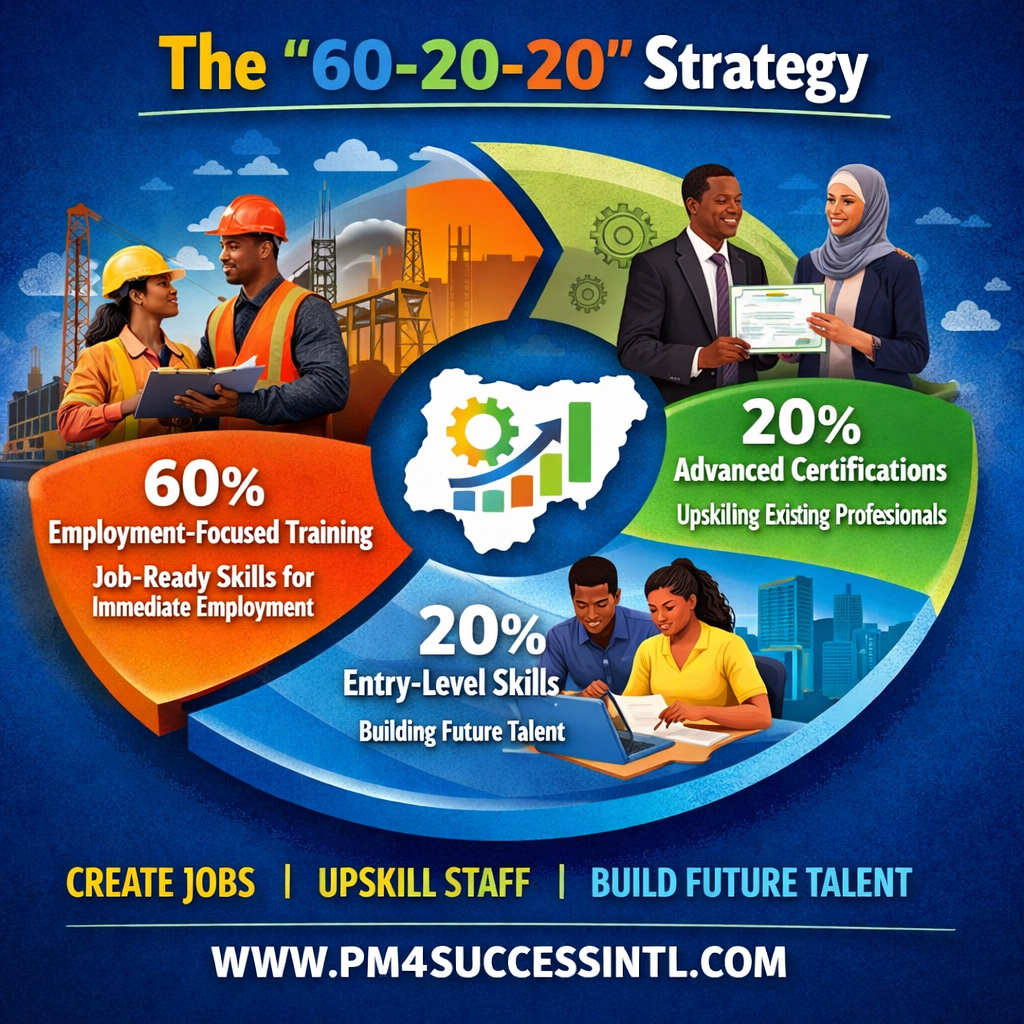
To address this gap, the Nigerian Content Development and Monitoring Board (NCDMB) promotes the 60–20–20 Strategic Training Model, which connects training directly to employment and long-term industry growth.
Here’s how it works:
- 60% — Employment-driven training
The largest investment goes into programs that lead directly to jobs. Training is practical, industry-aligned, and focused on deploying people into real roles.
- 20% — Advanced certification & specialization
Industries also need experienced professionals who stay updated. This portion strengthens existing personnel through advanced certifications and specialized training.
- 20% — Entry-level skill development
New entrants must still be prepared with foundational job skills to create a steady pipeline of future professionals.
The real lesson for organizations and professionals here is that training works best when it balances job creation, professional growth, and future talent development, not when it focuses on only one area.
For companies, this means investing where employment outcomes are measurable.
For professionals, it means choosing training that improves both employability today and career relevance tomorrow.
If you’re designing training or planning your career path, which of these three areas are you investing in the most?
.
.
.
.
.